
Equipment and urgent issues
Track your equipment and deal with the urgent jobs first
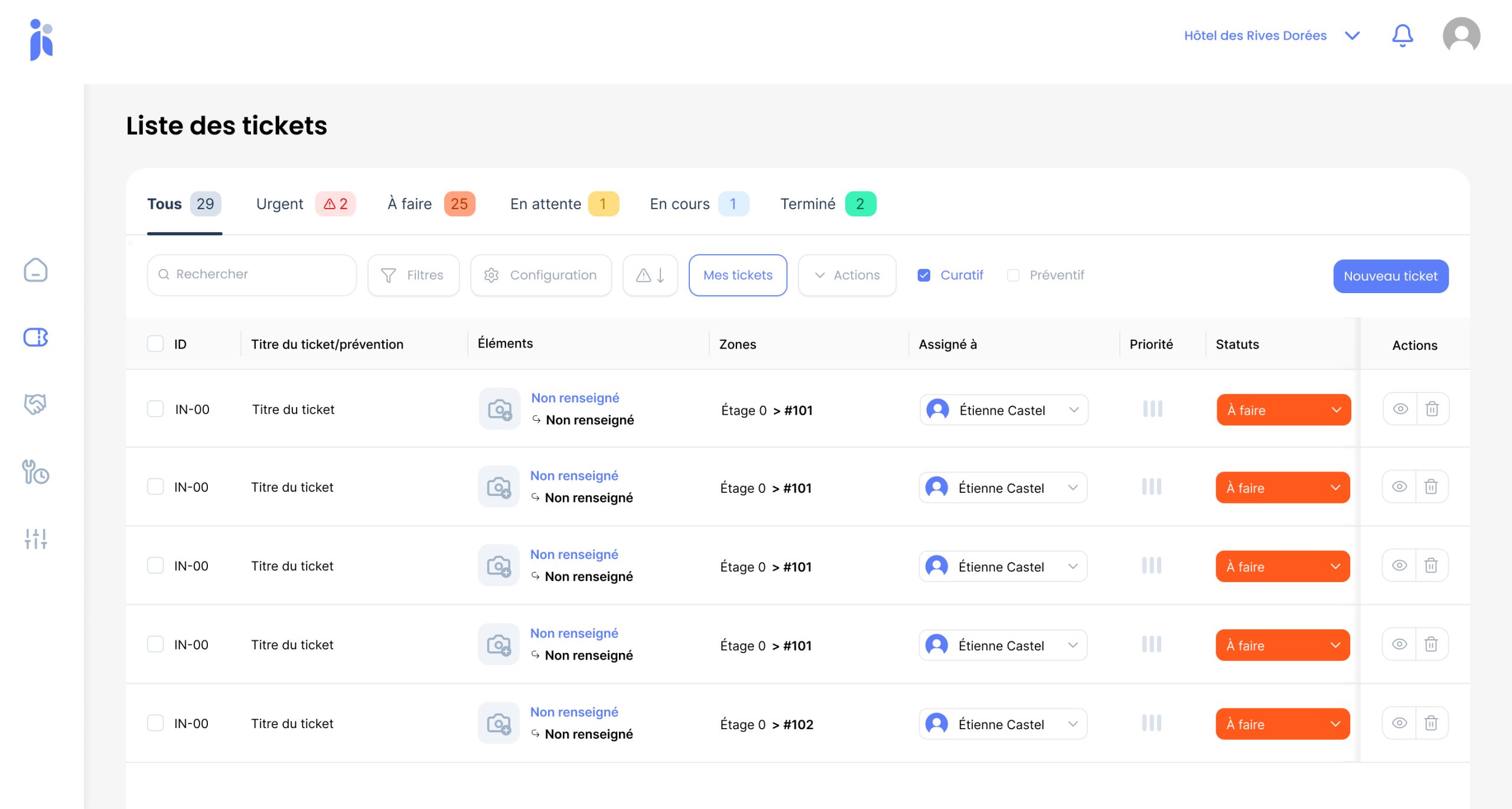
Every asset has its own record, its history and its current condition. Every ticket has a priority. Your technician opens the list in the morning and knows where to start. Urgency stops being whatever shouts loudest.
- A structured estate
- A priority on every ticket
- Statuses that mean something
- History held per asset
In hotels everything is urgent — so nothing is
A bulb out in a corridor, a lock sticking on an occupied room, a cold room climbing in temperature: three requests, three people calling them urgent, one technician.
The problem is not a shortage of reports, it is the absence of any ranking between them. When every request arrives at the same level, the decision gets made on something else: who pushed hardest, who came by last, whose office is nearest. The most critical assets are not necessarily the ones people talk about most — and a cold room drifting out of range never complains.
Urgency by declaration
Whoever reports a fault always rates it top priority. That is human, but it is not a ranking.
The critical asset that says nothing
A piece of plant drifting out of range warns nobody until it fails outright.
Arbitration by volume
With no priority set, the technician deals with whatever they are reminded about most often.
What you keep track of
Two things in one place: the condition of your estate, and the order in which faults get dealt with.
-
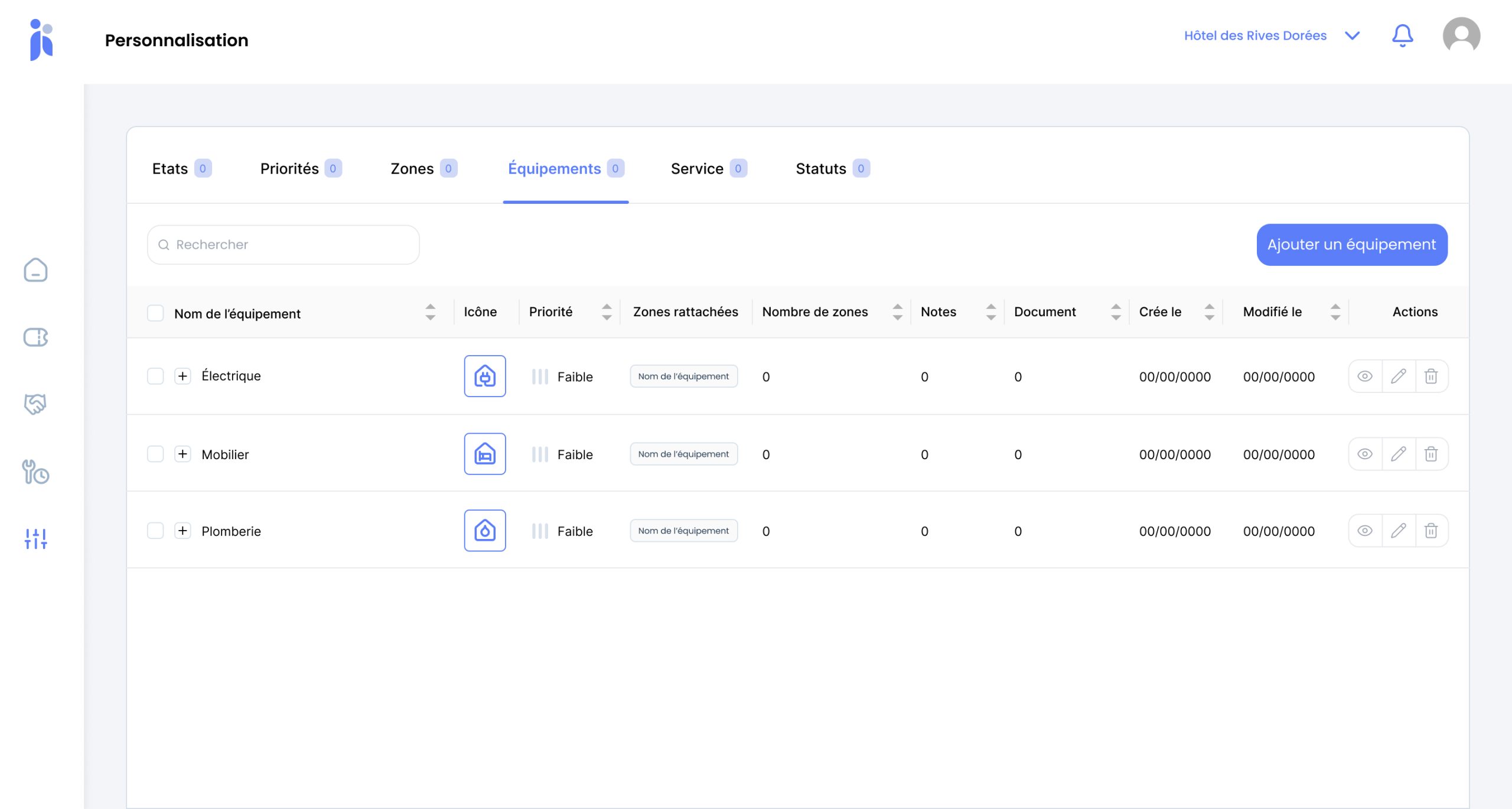
An estate structured by family and by area
Every asset belongs to a family — electrical, plumbing, furniture, refrigeration — and sits somewhere. It is that double classification that lets you find things, count them and compare them.
-
A priority on every job
Set when the ticket is raised, and changed later if it needs to be. It tells the technician where to start, instead of leaving them to arbitrate alone between three people who are all insisting.
-
Statuses that show where things are stuck
To do, in progress, on hold, done. A ticket waiting on a part is clearly not the same as a ticket nobody has picked up: those are two different problems.
-
A full history for every asset
What happened to it, when, and how many times. It is that build-up that turns an asset from a one-off incident into a case for investment.
Bringing order to the estate and to the queue
Order does not come from software. It comes from decisions you make once and the tool applies from then on.
-
You take stock of your equipment
By family and by location. An estate that has never been listed always holds a few surprises — the exercise is worth it in its own right.
-
You decide on your priority levels
Three or four are plenty, provided everyone knows what separates them. A scale nobody understands ranks nothing.
-
You define your statuses
They should reflect how you actually work, including waiting on a part or on sign-off. A missing status creates a blind spot.
-
Reports come in already classified
Every ticket arrives with its asset, its area and its priority. The queue sorts itself.
-
You work from the top of the list
And you look regularly at whatever has been sitting at the bottom too long: that is often where the real problems hide.
What you gain
Genuine emergencies handled first. Priority beats persistence.
An estate you finally know. You know what you own, where it is and what state it is in.
Blockages made visible. Waiting on a part is no longer mistaken for abandonment.
Problem assets identified. The build-up of jobs points to the candidates for replacement.
A technician who no longer decides alone. The queue is ordered before they open their list.
Fewer outright breakdowns. What is drifting shows up before it breaks, once it is being tracked.
Frequently asked questions
How many priority levels do we need?
Three or four, no more. Beyond that nobody can tell level 4 from level 5 and everyone picks the maximum just in case. What matters is not the number of levels but that everyone can describe what justifies each one.
How do we stop everything being declared urgent?
By defining urgency through its consequences rather than how it feels: a room taken out of service, a safety risk, a piece of production plant at a standstill. An objective criterion is easier to discuss than an impression, and it can be checked.
Do we have to inventory every asset before we start?
No, and trying to do it all at once is the surest way never to start at all. Begin with the equipment whose failure takes a room or a service out of use; the rest gets added as jobs come in, quite naturally.
How do we handle identical equipment in a hundred bedrooms?
Asset duplication exists for exactly that: you describe it once and replicate it across the areas concerned. Each copy then keeps its own history, which is how you spot the problem rooms.
What do we do with tickets languishing at the bottom of the list?
Review them periodically. An old ticket is either a request that was never real — in which case it gets closed — or a real problem that was under-prioritised — in which case it moves up. Letting a queue grow indefinitely undermines the tool in the eyes of the people reporting faults.
Are night-time emergencies handled differently?
The mechanism is the same: a priority and an assignment. What changes is your on-call arrangements and the notification preferences of whoever is on duty that night.
Explore further
More on running maintenance in Inara, from planning a job to reading the numbers afterwards.
Let us look at how your urgent jobs get ranked
Thirty minutes on your estate, your priorities and the way your team is organised. No commitment.