
History and traceability
A complete history of your maintenance work
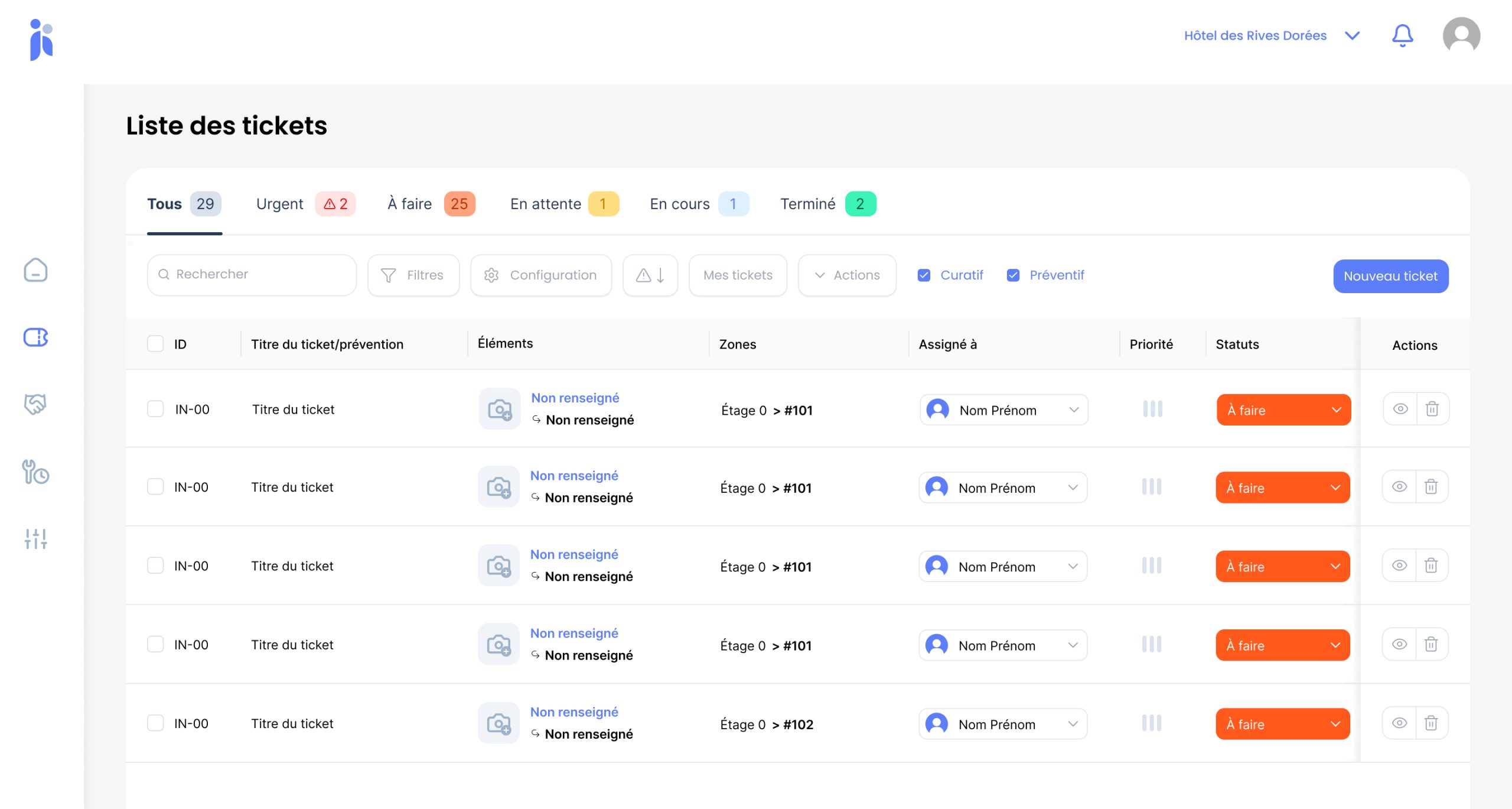
Every job stays attached to its equipment and its area, dated, described, with the name of whoever carried it out. An inspection, a handover, a dispute: the answer sits on the record, not in somebody's memory. What is logged can be proven.
- Full timeline
- Tied to the equipment
- Notes and attachments
- Searchable and filterable
A hotel's technical memory rarely fits in a ring binder
"We have changed that valve before, surely?" Nobody knows. The engineer who did it left last year, and the job book stopped three months after it was started.
Hotels combine a high turnover of technical staff with buildings that stay standing for decades. That pairing is the worst enemy of memory: five years of accumulated know-how evaporates in a notice period. So faults that were already diagnosed get diagnosed again, parts you had in stock get bought a second time, and a hidden defect surfaces just as you come to sell the property — in other words, far too late.
The diagnosis done twice
With no history, every recurring fault is treated as a first occurrence, and billed like one.
The handover that starts from nothing
Someone leaving takes what they knew about the plant with them, unless it was written down in their place.
The inspection with nothing to show
To an inspector, a statutory check with no record is the same thing as a check that never happened.
What the history keeps
Nothing has to be archived by hand: the record builds itself as the work goes on, because it is a by-product of the job rather than an extra task.
-
Every job, dated and attributed
Who did what, when, on which asset, and with what description. The timeline reads straight through, including status changes and reassignments.
-
Attached to the right place
The job is linked to the equipment, which sits in an area, on a floor, in a building, on a site. That chain is what lets you trace the past of one specific item.
-
With its notes and attachments
A part number, a manual, a photo taken before the work started, a quote from a contractor: whatever documents the job stays with the job.
-
Searchable and filterable
By status, by area, by person, by period. A history you cannot question is not a history, it is a storeroom.

How the record gets built
The quality of your history is decided when the ticket is raised, not on the day you need it.
-
You structure the property
Sites, buildings, floors, areas, rooms, then the equipment itself. Without that tree, a job has nothing to hang on to.
-
Every report is attached
As the ticket is raised, the equipment and the area are named. Those three seconds are where the whole value of the history comes from.
-
The job is documented as it is done
Description, photos, parts replaced, contractor on site. While it is all still fresh, not the following week.
-
Closing the ticket closes the loop
A completed work order keeps its whole journey. Nothing is overwritten, intermediate steps included.
-
You query it when you need to
An inspection, a dispute, a replacement decision, a technical audit ahead of a sale: the material is already there.
What you gain
Recurring faults recognised for what they are. The second diagnosis builds on the first instead of repeating it.
A handover that genuinely hands something over. Your successor inherits a history, not a two-hour guided tour.
Statutory checks you can defend. Mandatory inspections are dated and attached to the equipment they cover.
Disputes settled on facts. What was done, when and by whom is no longer up for debate.
Replacement decisions with something behind them. The run of work orders tells you when an asset has had its day.
Asset value on the record. A technical audit before a sale finds tracked maintenance rather than a gap.
Frequently asked questions
How long is the history kept?
It is not purged: an asset keeps its past for as long as it exists in the property. That is precisely the point on plant that lasts fifteen or twenty years, where human memory struggles to last three.
Can a past job be edited or deleted?
Edit and delete rights are set by role. A history that anyone can rewrite loses its value as evidence: it is worth settling at the outset, not after the first dispute.
Would it stand up at a statutory inspection?
A history that is dated, names the person and is attached to a specific asset is a serious piece of evidence, and already far better than a paper job book. The formal requirements vary with the obligation concerned — fire safety systems, lifts, hot water — so check them case by case with the body carrying out the inspection.
What do we do with the paper records we already have?
Re-entering everything rarely pays off. The most effective approach is to start cleanly from a given date, and to re-enter the history only for critical equipment — the items you already know are approaching a replacement decision.
What if a job was carried out without a ticket?
It can be created after the event, provided it is dated correctly. A slightly reconstructed history beats a gap: what matters is that the record exists and that the date reflects reality.
Is the history useful beyond maintenance?
Yes. It is the raw material for a technical audit ahead of an acquisition or a sale, for an insurance claim after an incident, and for a negotiation with a contractor whose real response times you want to assess.
Explore further
The other parts of Inara that feed the same record, and where to begin.
Let us look at what your history should hold
Thirty minutes on your critical equipment, your obligations and the way your team works. No commitment.