
Assigning work orders
Send every job to the right pair of hands
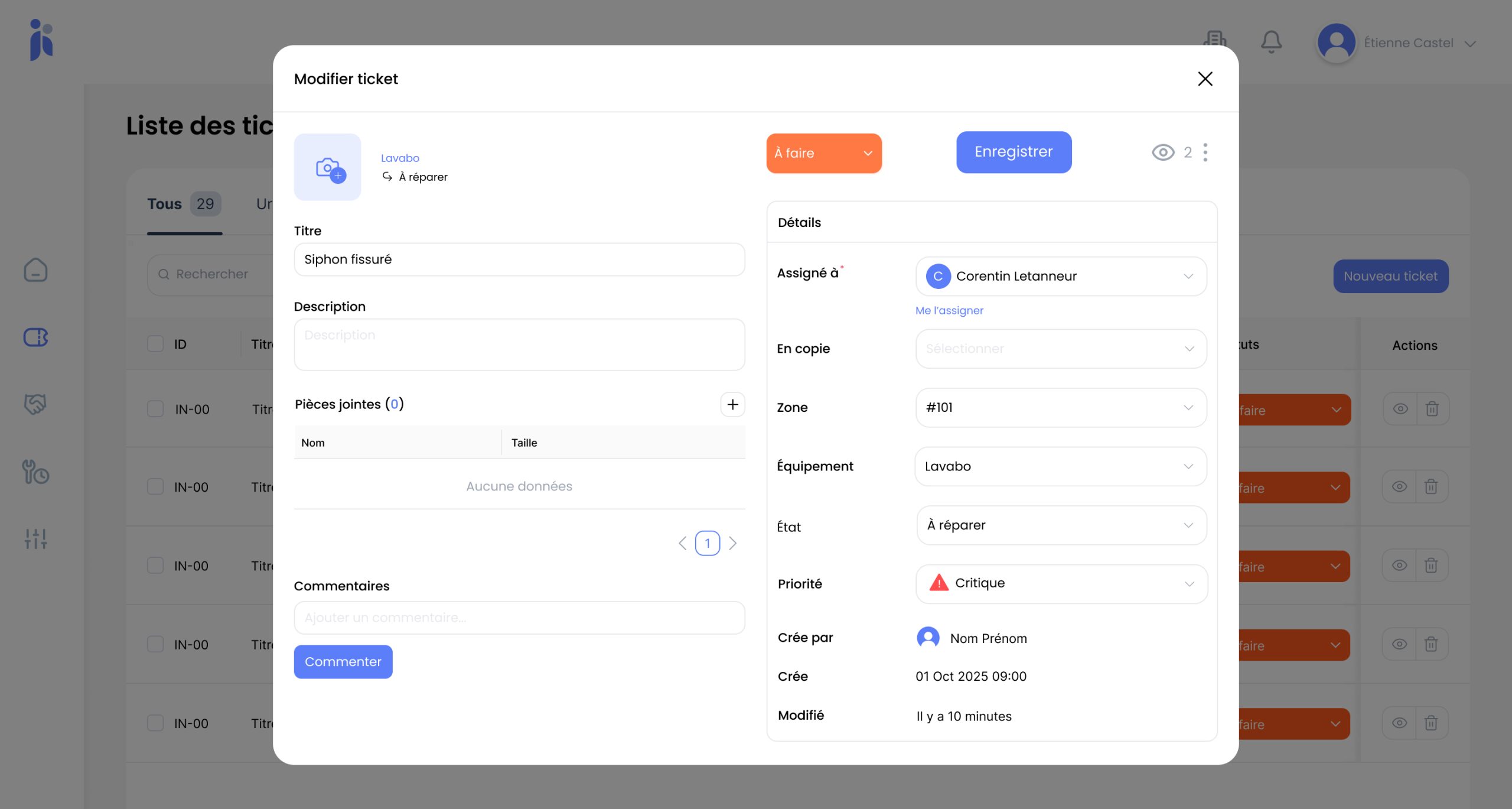
In-house or contractor, technical team or housekeeping: every ticket goes to whoever should be dealing with it, with the location, the priority and the context. No more tickets sitting idle while everyone wonders whose job it is.
- A person or a team
- External contractors
- Others kept in the loop
- Priority set upfront
A ticket with no owner is a ticket that goes nowhere
The fault is reported, everybody sees it go past, and three days later it is still there — because each of them assumed somebody else had picked it up.
Hotel technical teams are rarely large, and often multi-skilled: a plumber who turns a hand to electrics, a housekeeping assistant who fixes things, contractors on the regulated work. That flexibility is a strength on the ground, but it blurs who owns what. With nobody named, a request dissolves into the group — and accountability goes with it.
Accountability spread too thin
When a job belongs to everyone, it belongs to nobody, and it waits.
The contractor outside the system
A job handed over by phone appears in no record at all: you ring back to find out where it stands.
The invisible workload
With no traceable assignment, there is no way to see who is swamped and who has room to spare.
How work gets assigned
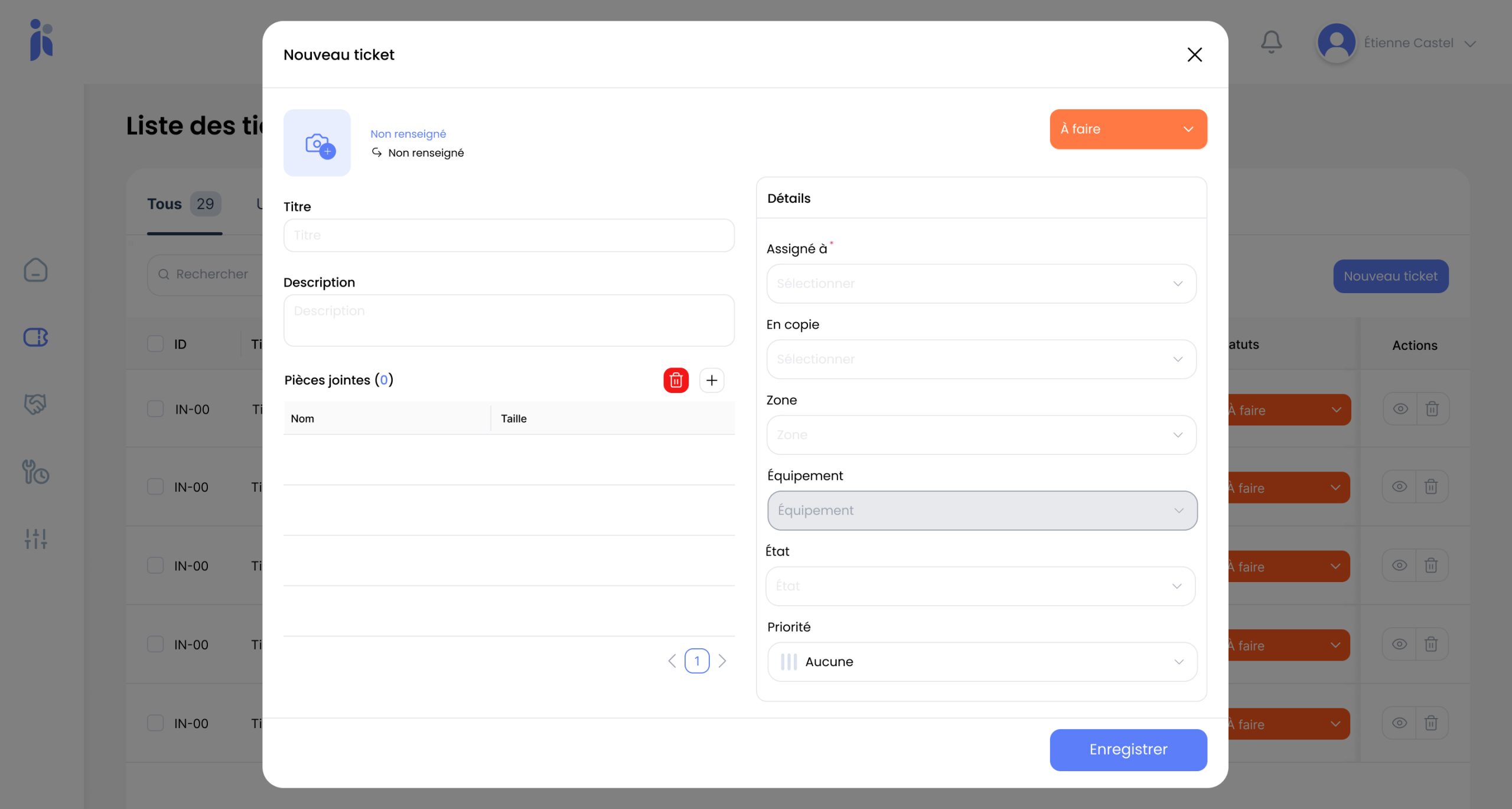
Assignment is decided the moment the ticket is raised, and it can change later without the trail being lost.
-
To a person or to a team
Assign by name when you know who should attend, or to the team when they sort it out between themselves. Both work, and the second stops a ticket sleeping because the named person is on leave.
-
To an external contractor
A job can be handed to an outside firm exactly as it would be to a colleague. The follow-up is the same, and so is the record — you know what was asked, of whom, and when.
-
With people copied in
The head housekeeper wants to know when the room will be back in service, management wants to follow the urgent ones. Copying people in keeps them informed without handing them the responsibility.
-
With a priority set upfront
Not every job carries the same weight. A priority set at assignment tells the technician where to start, instead of leaving them to weigh it up alone.
From the report to the right pair of hands
A handful of settings up front is enough to make assignment a reflex rather than a question.
-
You set up your departments and teams
Maintenance, housekeeping, technical: each with its members. That is the basis for assignments and notifications.
-
You record your contractors
The firms that come in regularly are entered once and are then available on every ticket.
-
You define the roles
Who can raise, who can assign, who can close. Permissions stop a ticket being reassigned without anybody knowing.
-
Assignment happens as the ticket is raised
The report leaves with an owner and a priority. The person named is notified straight away.
-
You reassign whenever you need to
Leave, a skill that is missing, an emergency: the ticket changes hands, and the history keeps the trail of where it has been.
What you gain
No more orphaned tickets. Every job has a named owner from the moment it is raised.
Contractors inside the loop. Tracking outside work stops running on phone calls and memory.
A workload you can read. You can see who is loaded and who can take more, before anyone reaches breaking point.
Priorities stated out loud. Technicians no longer arbitrate alone between ten equally urgent requests.
Information that travels. Copying people in keeps the right people posted without blurring who is accountable.
Clean handovers. A reassignment leaves a trail instead of wiping the ticket's past.
Frequently asked questions
Can a job be assigned to a team rather than to an individual?
Yes, and it is often the better option. Assigning to a department lets the team organise themselves and stops a ticket waiting for someone to come back from leave. Assigning by name still earns its place when a particular skill is needed.
How do we bring an external contractor in?
They are recorded as an available resource, then a job is handed to them straight from the ticket. They receive the information, and the follow-up sits in the same place as it does for in-house work — which is exactly what removes the chasing phone call.
What happens if the person assigned is away?
The ticket is reassigned in seconds, and the history keeps a record of the handover. Avoiding that situation is also why assigning to a department is often the best default.
Can we stop just anyone reassigning a ticket?
Yes, through roles and permissions. You can perfectly well let everybody raise a report while reserving assignment and closure for the technical management.
How do we handle jobs that involve several trades?
In hotels, plenty of jobs are mixed — a leak that damages a ceiling calls for a plumber and then a decorator. The simplest practice is one ticket per trade, all linked to the same asset and the same area: each person follows their own part, and the equipment history brings them back together.
Do we need a licence for everyone who attends?
The question comes up mainly for occasional contractors. It is worth looking at together, in the light of how you are organised: the number of regular users and how often outside firms are called in change the sizing completely.
Explore further
The other pieces of Inara that keep technical work moving.
Let us look at how your technical work is shared out
Thirty minutes on your teams, your contractors and your assignment rules. No commitment.